Bad Faith Claim Survives Summary Judgment
June 08, 2026 —
Tred R. Eyerly - Insurance Law HawaiiThe court denied the insurer’s motion for partial summary judgment on the insured’s bad faith claim, but granted the motion on the insured’s claim for punitive damages. Serbian Orthodox Church v. Brotherhood Mut. Ins. Co., 2026 U.S. Dist. LEXIS 58234 (S.D. Cal. March 19, 2026).
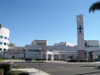
On February 1, 2023, the Church filed a claim for water damage with Brotherhood Mutual Insurance Company (BMIC). The claim was based on rain and wind that caused extensive water intrusion into the Sanctuary, damaging its plaster walls and ceilings and fresco paintings. The claim was assigned to Patrick Hurley. Hurley sent a letter discussing potential bars to coverage and requesting further information and documents from the Church.
Read the full story...Reprinted courtesy of
Tred R. Eyerly, Damon Key Leong Kupchak HastertMr. Eyerly may be contacted at
te@hawaiilawyer.com
Four Families Now Live in the Season Six Rock the Block Homes in Grantsville, Utah
April 20, 2026 —
Hamlet HomesSALT LAKE CITY, April 20, 2026 /PRNewswire/ -- The premier of Rock the Block season seven aired last Monday and is set in Las Vegas, Nevada. Rock The Block is HGTV's highest rated show. Last year, season six was set in Utah and had HGTV's highest rating yet, with over 14 million viewers. All episodes of season six were filmed in the Worthington Ranch community in Grantsville, Utah. The four homes on the show were built by Utah builder Hamlet Homes. During the show, the location of the four Rock The Block homes had to be kept secret and were surrounded by a locked gate. After over a year of being inaccessible, the Utah public was invited in May 2025 to tour the homes and help raise money together for charity. On May 30-31, 2025, Hamlet hosted a 'Rock The Block Party' where the public was able to walk through the homes made famous by the show.
Hamlet Owner, VP of Marketing & Design Tami Ostmark shares stories from the show and her perspective of what it's like to be the builder on a national show like this. Ostmark was on set almost the entire time. "As expected, there were times when there was tension on the set. All four designers were super competitive with each other. It's amazing that the production team was able to produce the show as well as they did. I'm very impressed," said Ostmark.
Another interesting point related to the show is how much work the local builder is responsible for. Some nights as many as 30 Hamlet team members worked through the night to keep up with the pace of production. "Each designer provided their own trusted carpenters to do finishing work. In two of the cases, designers' flew their favorite carpenters in to carry out their visions. Given the quick turnaround, it's not always practical for finishing work to be permanent. Sometimes, it just needs to look appealing on camera," said Ostmark. This is frequently referred to as 'TV Magic'. "When the show was over, Hamlet re-did any areas that required extra attention". The show really does shoot in only 7 weeks as depicted. This creates a fast pace that was very exciting to be a part of", continued Ostmark. All four of the homes featured on the show have since been purchased; four Utah families currently call them home.
ABOUT HAMLET HOMES
Hamlet Homes (www.hamlethomes.com) crafts quality customer-oriented townhomes and single-family homes located in attractively designed communities in Utah and Idaho. Since the company's founding in 1995, Hamlet has built over 5,000 homes in 80 communities. The company is a proud recipient of many awards on Sustainable Business & Design, Quality Builder Awards; recognized both locally and nationally. Named by the Salt Lake Chamber of Commerce as the 'Veteran Owned Small Business of the Year, in 2019'. Hamlet has since been named several times to the Professional Builder's Housing Giants List and annual HOME AWARDS Best Customer Experience. Most recently in 2026, Hamlet was named Utah's 'Best of State for Real Estate Development and Utah Businesses 'Best Companies to Work For' for the 6th consecutive year.
Potential Gap in Workers Compensation Immunity Statutory Framework
June 02, 2026 —
David Adelstein - Florida Construction Legal UpdatesWorkers compensation insurance is important. As an owner, you want to ensure the contractors you hire have workers compensation insurance. Assuming you hire a contractor that is statutorily exempt from workers compensation, you want to make sure, no exception, that any subcontractor that is hired has workers compensation insurance. (Regardless, you always want subcontractors to have workers compensation insurance.). In construction, the prime contractor serves as the “
statutory employer” for purposes of workers compensation insurance.
With workers compensation comes
workers compensation immunity.
Read the full story...Reprinted courtesy of
David Adelstein, Kirwin NorrisMr. Adelstein may be contacted at
dma@kirwinnorris.com
The Best Lawyers in America® - Ball Janik Attorneys Earn Multiple Recognitions
September 01, 2026 —
Ball Janik LLPOrlando, FL, August 20, 2026 – Ball Janik LLP is pleased to announce that 24 of its attorneys have been recognized in the 2027 editions of The Best Lawyers in America® and Best Lawyers: Ones to Watch® in America. The 33rd Best Lawyers edition recognitions are based on peer review and highlight attorneys across a range of practice areas. This recognition underscores the broad experience Ball Janik's attorneys bring to the firm's construction defect practice.
"We're proud to be recognized by Best Lawyers again this year," said James C. Prichard, Managing Partner of Ball Janik LLP. "These honors reflect the expertise and depth of our team, our continued growth across Florida, and our commitment to providing strong counsel to clients in complex construction, insurance recovery, and litigation matters."
Ball Janik attorneys recognized in the 2027 edition of The Best Lawyers in America® include:
Keegan A. Berry — Construction Law
Brian T. Crevasse — Construction Law; Litigation - Construction
Todd Demetriades — Litigation - Construction
Joseph R. Fitos — Construction Law; Litigation - Construction
Megan A. Picataggio — Construction Law
Jon E. Lemole — Construction Law; Litigation - Construction
Salvatore G. Scro — Construction Law
Nicholas B. Vargo — Construction Law; Litigation - Construction
Kelly M. Corcoran — Construction Law
Gabriel Z. Coelho — Construction Law
Evan J. Small — Construction Law; Litigation - Construction
Franchesco Soto — Construction Law; Litigation - Construction
Phillip E. Joseph — Litigation - Construction; Real Estate Law
James C. Prichard — Construction Law
Ball Janik attorneys recognized in the 2027 edition of Best Lawyers: Ones to Watch® in America include:
Nicholas Passantino — Litigation - Construction
Amanda L. Gonzalez — Construction Law; Litigation - Construction
Morgan N. Lester — Litigation - Construction
Chris S. Tribbey — Construction Law
Kyle Bugden — Construction Law; Litigation - Construction
Brian Tannenbaum — Construction Law
Kayla Mosquera — Insurance Law
Natasha L. Biela — Commercial Litigation
Elijah C. Waring, Jr. — Product Liability Litigation - Defendants
Greg K. Demers — Construction Law
About Ball Janik LLP
Ball Janik LLP is a Florida-based law firm offering construction defect, construction law, insurance recovery, and commercial litigation counsel, to its local and national clients. The firm was founded in 1982 and has expanded its capabilities, professionals, and geographic footprint. What started as a small firm focused on real property, land use, and litigation (known then as Ball Janik & Novack) has grown to a team of 70-plus attorneys and paralegals in five offices in Florida, with centuries of combined experience and capabilities. The firm has been recognized by Chambers USA, including for its construction law capabilities in Florida, U.S. News & World Report and Best Lawyers®, The Best Lawyers in America©, Super Lawyers, and Corporate International. Read more at www.balljanik.com.
Managing Rising Costs and Shifting Legal Risk for Florida High-Rise and Condominium Projects
May 05, 2026 —
Stephen Hauptman - Ball Janik LLPFlorida's construction defect landscape is experiencing a major shift. The convergence of material and labor cost volatility, regulatory tightening, and increasingly complex litigation strategies is forcing associations, developers, and their counsel to rethink how they approach risk management and dispute resolution. For those managing large-scale condo and high-rise projects, the stakes have never been higher.
The Cost Volatility Trap
Construction material prices rose at a "staggering" 12.6% annualized rate during the first two months of 2026, according to
recent industry analysis. Tariff impacts are projected to lead to more increases of 5.4% to 6.8%, depending on property type. For associations facing construction defect claims, this volatility creates a cascading problem: repair scopes defined two years ago are now dramatically underpriced, and damage calculations that appeared reasonable at discovery are obsolete by the time of settlement.
Courts and mediators are increasingly scrutinizing how cost estimates were developed and whether they account for existing market circumstances. Associations must now commission updated repair assessments more frequently, a practice that increases investigation costs but strengthens the credibility of damage claims. Conversely, defendants are weaponizing cost inflation as a defense, arguing that claimed damages are speculative or inflated. The practical result: repair sequencing and phasing strategies have become critical litigation tools. Associations that can demonstrate a rational, cost-effective repair plan tied to current market data are more favorably placed in settlement negotiations.
Regulatory Pressure and Deliberate Timing
Florida's 2026 condo compliance regime has significantly changed the defect claims landscape. Elevated transparency requirements, stricter reserve funding mandates, and tightened building safety inspection protocols mean that associations now face dual pressures: Comply with new regulations while simultaneously handling construction defect exposure.
This regulatory environment is changing investigation and documentation strategy. Associations that delay defect investigation to avoid triggering reserve funding obligations or disclosure requirements are taking on considerable legal risk. Recent case law such as the Third District Court of Appeal's reaffirmation of Chapter 558's pre-suit mediation requirements, underscores Florida's intent to resolve disputes early. Associations that move deliberately and record carefully during the pre-suit phase gain leverage in mediation and reduce the risk of expensive litigation.
Timing also intersects with repair sequencing. Associations must now balance the urgency of compliance inspections against the strategic advantage of phased repairs. Some associations are using compliance deadlines as a forcing mechanism to accelerate settlement discussions, while others are sequencing repairs to demonstrate good-faith remediation efforts before litigation commences.
The Emerging Risk Transfer Challenge
As construction defect claims grow more complex and costly, the traditional risk transfer systems, such as design-build warranties, contractor bonds, and insurance, are proving inadequate. Developers and general contractors are increasingly shifting risk to subcontractors and material suppliers, fragmenting liability and complicating recovery efforts for associations. Permitting and approval friction is also creating new litigation pressure points. Delays in municipal approvals, changes to building code interpretations, and disputes over remedial work compliance continue to spawn collateral claims that go beyond the original defect. Associations must now anticipate not only defect liability but also regulatory compliance disputes with municipalities, creating a dual-front legal challenge.
For large communities, this means reconsidering the entire risk architecture. Insurance carriers are tightening coverage, and traditional indemnification chains are breaking down. Forward-thinking associations are engaging counsel earlier in the development process to negotiate clearer risk allocation provisions and more robust insurance requirements.
Taking a Data-Driven Approach
Managing rising costs and shifting legal risk in Florida's high-rise and condo market requires a more sophisticated, data-driven approach. Associations must commission frequent cost updates, move deliberately through pre-suit investigation and mediation, and challenge traditional assumptions about risk transfer. Developers and their counsel should view regulatory compliance not as a burden but as an opportunity to demonstrate good-faith risk management and strengthen settlement positioning.
The firms and associations that succeed in 2026 will be those that treat cost volatility, regulatory change, and litigation strategy not as separate challenges but as linked elements of a coherent risk management framework.
Stephen Hauptman is special counsel in Ball Janik LLP’s Fort Lauderdale office. He may be reached at shauptman@balljanik.com.
Insurer Dispenses with Bad Faith Claim on Summary Judgment
June 22, 2026 —
Tred R. Eyerly - Insurance Law HawaiiThe court granted the insurer’s motion for partial summary judgment because the insured failed to present evidence that the insurer failed to conduct a reasonable investigation. PSY Burger, LLC v. State Farm General Insurance Company, 2026 U.S. Dist. LEXIS 66991(C.D. Cal. March 20, 2026).
The insured’s commercial property suffered heavy damage from tropical storm Hilary. State Farm denied coverage to repair the damage. The insured sued State Farm alleging breach of contract and bad faith due to an inadequate investigation. Apparently, the insured did not retain an expert to opine on claims handling.
Read the full story...Reprinted courtesy of
Tred R. Eyerly, Damon Key Leong Kupchak HastertMr. Eyerly may be contacted at
te@hawaiilawyer.com
FERC Issues Show-Cause Orders: Impacts on California and Other Regional Power Markets
July 13, 2026 —
Stephen J. Humes, Alicia M. McKnight & Jason Drogin Atwood - Gravel2Gavel Construction & Real Estate Law BlogAt an open meeting on June 18, 2026, the Federal Energy Regulatory Commission (FERC) issued show-cause orders under Section 206 of the Federal Power Act to the six FERC-jurisdictional RTOs/ISOs—PJM Interconnection, ISO New England, Midcontinent Independent System Operator, Southwest Power Pool, New York Independent System Operator and California Independent System Operator—along with their transmission owners (TOs), directing each region and the TOs to justify or revise tariff provisions governing how data centers and other large loads connect to and receive transmission service from the grid. These show-cause orders will impact several power markets across the country, including California.
Reprinted courtesy of
Stephen J. Humes, Pillsbury,
Alicia M. McKnight, Pillsbury and
Jason Drogin Atwood, Pillsbury
Mr. Humes may be contacted at stephen.humes@pillsburylaw.com
Ms. McKnight may be contacted at alicia.mcknight@pillsburylaw.com
Mr. Atwood may be contacted at jason.atwood@pillsburylaw.com
Read the full story...
Congratulations to Reno Partner Karen Baytosh for Securing a Complete Dismissal via a Motion for Summary Judgment
July 13, 2026 —
Dolores Montoya - Bremer Whyte Brown & O'Meara LLPBWB&O is proud to announce that Reno Partner Karen Baytosh received a significant victory on behalf of the firm’s Developer Client in a high-exposure personal injury matter.
Plaintiff, a teenager, was struck by an intoxicated driver while walking her dog at night, sustaining catastrophic injuries requiring 24-hour critical care for the remainder of her life. Plaintiff’s Guardian brought suit against the drunk driver and her husband, the City, and BWB&O’s Developer Clients, alleging that the City and Developers failed to improve street lighting and install a sidewalk that would have prevented the accident.
Read the full story...Reprinted courtesy of
Bremer Whyte Brown & O'Meara LLP